ASUS ARES Review
Posted by Hilbert Hagedoorn on: 07/06/2010 01:00 PM [ 0 comment(s) ]

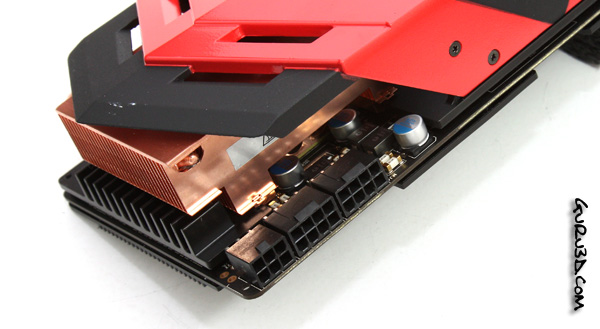
No need for dual 8-pin PEG power headers, we want more ! 75 Watt is supplied though the PCie bus, the 6-pin PEG delivers another 75W and then the 8-pin connectors may deliver 150W each. The grand total then is 450W (and a little extra). Though some converter PEG cables are included, we very much recommend a power supply with the connectors pre-installed.
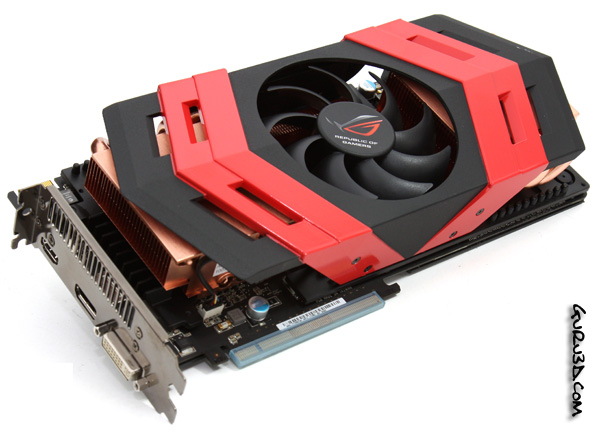
Right, a few extra random photo's to show off the product in a little more detail.
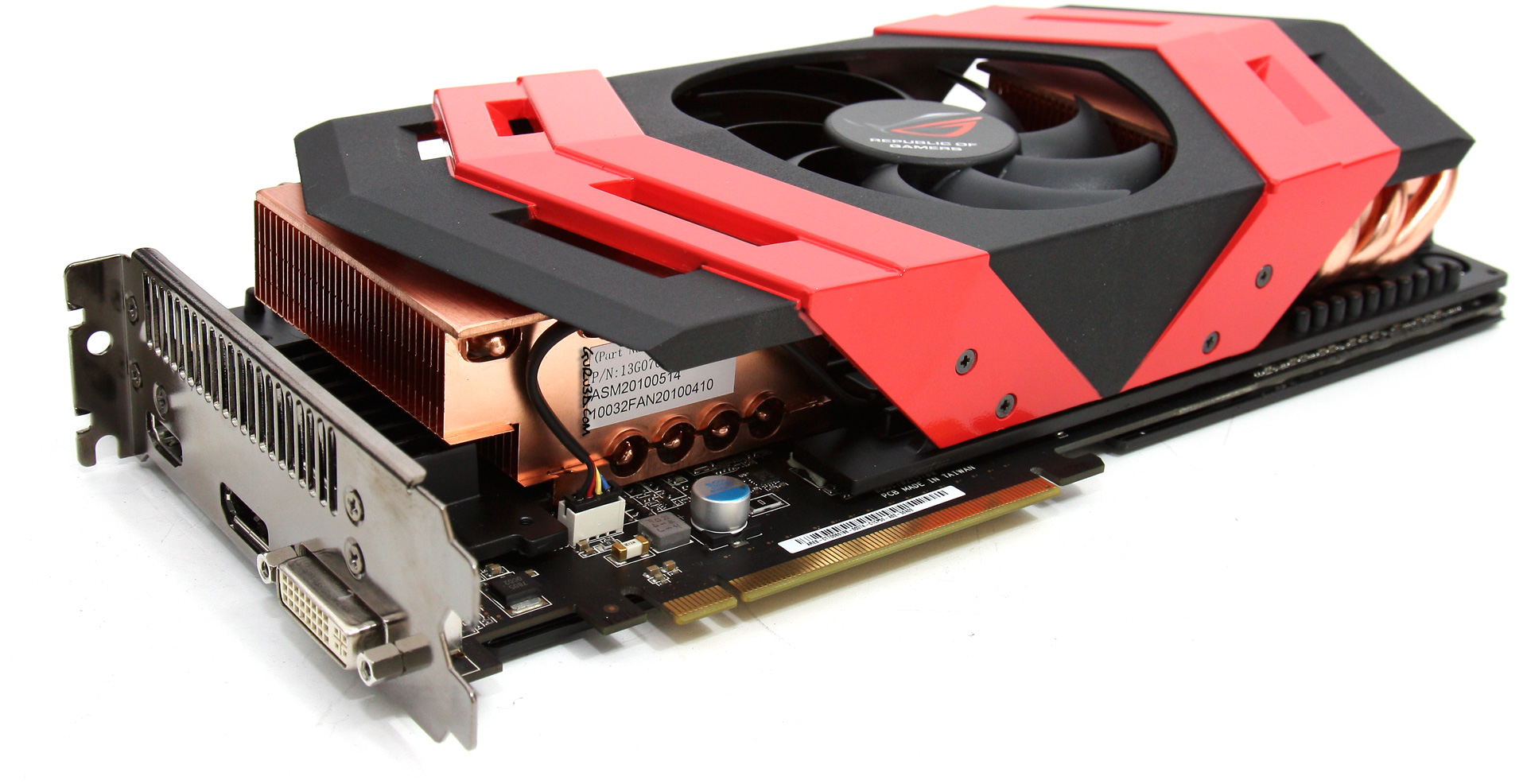
Again overall a nice looking card but huge and heavy alright. But let's zoom in a little at the rear side of the graphics card.
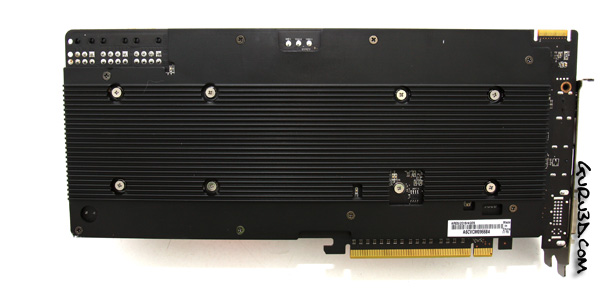
When we flip the card around we see a nice backplate installed. I'm a big fan of this. there is much less risk of damage this way. The downside -- it could trap heat. However, as you can see, ASUS used a plate with a heatsink kind of texture in it, that definitely should help with overall cooling a little. But let's zoom in a little further.
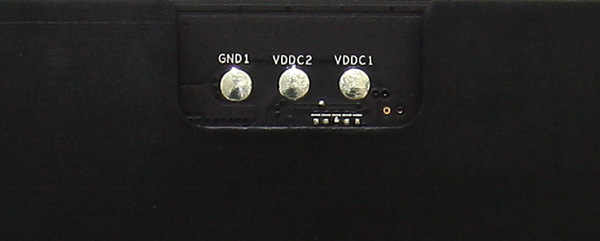
At the topside (on the rear) you can see three small solder points, these are voltage monitor points that can be tapped with a multi-meter, displaying GPU and memory voltages.
We test and review the ASUS ARES II as single card and in Crossfire today. The ARES 2 is a dual-GPU Radeon HD 7970 graphics card. Fully customized with 3rd party Liquid cooling. We test the product one one and three monitors in Eyefinity with the hottest games like Battlefield 3, Sleeping Dogs, Far Cry 3, Medal of Honor Warfighter, Hitman Absolution and many more.
ASUS ARES Review
We test and review the worlds fastest single Graphics card. These uber-high-enthusiast targeted products are intended to create a lot of buzz and potentially have a lot of marketing value. But face fact is also that there is a small group of end-users actually really interested it in, regardless of price and deficits. So with this round of realizing something fun, extra ordinary and sure prices very steep ASUS went back to the drawing board. They came up with a dual-GPU design solution based off Radeon 5970, but an overall better design, new PCB, higher clock frequencies on GPUs and more memory (2GB per GPU). Then they threw improved voltage regulation management into the mix and added a new cooler with the weight of a small baby on top of the GPUs to deliver something really special.

