Introduction

You know, it was October 2009 when ATI released the Juniper GPU, you guys and girls know it as the Radeon HD 5770. To date that has been one of the best selling graphics cards for ATI (now AMD).
The reason was simple, for not a lot of money you received a product with 800 shader processors. So for a price just above entry level that made a thing or two possible, gaming at 1600x1200 became a viable reality and next to that a grand feature set was introduced. Later on the 5770 got refreshed as the 6770, which really was the same product.
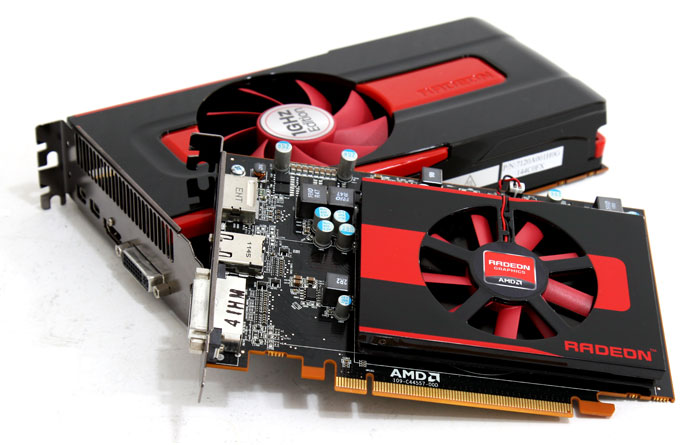
It's now February 2012 and AMD thinks they have a new '5770' in their hands. The codename is 'Cape Verde' for the GPU, and the graphics cards deriving from it are the Radeon HD 7750 and 7770 One GHz edition. This is not a refresh, it is a completely new GPU based on the same technology that powers the R7900 series, the GCN architecture.
And that's interesting, as with less shader processors AMD will make this product a good chunk faster. They benefit from the GCN architecture but also have a trump card at hand, as this is the first ever reference card that is clocked at 1 GHz - hence AMD will give all these cards a 'GHz edition' extension. See, the 28nm node allows them to place a good 1.5 billion transistors onto the GPU's 123 mm2 die, and that should make the card a good 25% faster.
AMD has been focusing on three primary features and key selling points ever since the series 5000 products were released. First off, the new graphics adapters are of course DirectX 11 ready. With Windows 7 and Vista being DX11 ready all we need are some games to take advantage of DirectCompute, multi-threading, Hardware Tessellation and new shader 5.0 extensions.
Another big feature of the product that you already learned about is of course Eyefinity, the ability to connect many monitors (depending on AIC/AIB choices in outputs) to your videocard and use it in a desktop environment, or to create an incredibly wide monitor resolution to play games in. The third big and prominent feature is of course performance for money. It's new, it's affordable, it has AMD written all over it.
Head on over to the next page where we'll meet and greet Cape Verde, aka Radeon HD series 7700.