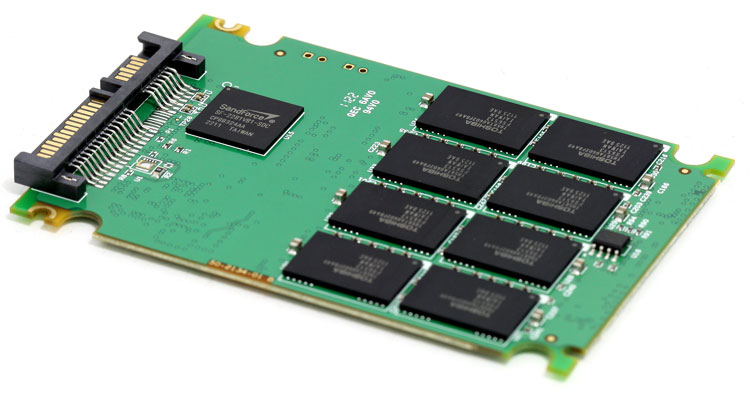
Specifications and architecture
So what is SATA III (6G) all about ?
SATA 6G (SATA 3), the latest revision of your SATA storage unit connectors, will increase the bandwidth on the SATA controller from 3 GBit/sec towards 6 GBit/sec. For a regular HDD that is not really very important. But with the tremendous rise of fast SSD drives this really is a large plus. Typically we get 3000 Mbit/s : 8 = 375 MB/sec bandwidth minus overhead, tolerances error-correction and random occurrences.
SATA 3 is doubling it up, as such we get 6000 Mbit/sec : 8 = 750 MB/sec (again deduct overhead, tolerances error-correction and random occurrences) of available bandwidth for your storage devices. As you can understand, with SSDs getting faster and faster that's just a much warmed and welcomed increase of bandwidth.
Put Sata III in RAID and you'll have even more wicked performance at hand. Most motherboards offer only two ports per controller though, so you are (for now) limited to RAID 0 and RAID 1 (mirror or stripe).
Also there are two controllers currently being used for mainstream, currently the Sandy Bridge P67 platform offers the highest performing solution. Though still fast, any platform using the Marvell 9128 or 9130 will see lower performance scores as the Marvell controllers use a PCI-Express Gen2 x1 lane interface to the system which restricts performance a little. The internal processor in that chipset also limits IOPS by the way.
Drive provisioning
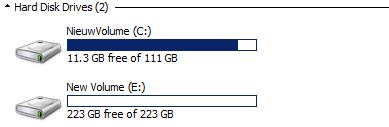 The one thing SSD and HDD manufacturers are quite horrible at, is to show you the real number of GB your drive has AFTER formatting. With 25nm NAND flash memory based products, it even gets worse as the SSD will need to reserve a chub of NAND memory for provisioning as well.
Say that you purchase a 120 GB SSD drive, people expect to get 120GB and not 111 GB, you can dwell down into the "Windows uses Binary capacity measurements 1024MiB = 1GiB" discussion, but it remains somewhat shady advertising. With 25nm NAND flash memory, a bit more than usual NAND FLASH will be hogged up by the SSD for redundancy and compression and is over-provisioning a few additional GB.
The end result for our 120 GB SSD is 111 GB after the NTSF format. We lost 8% = 9 GB right there without the drive even being used for storage.