Guru3D.com
  • HOME
  • NEWS
    • Channels
    • Archive
    • Search
    • Submit
  • DOWNLOADS
    • New Downloads
    • Categories
    • Archive
    • Search
    • Submit
  • GAME REVIEWS
  • ARTICLES
    • Editorials
    • Guru3D VGA Charts
    • Rig of the Month
    • Join ROTM
    • PC Buyers Guide
    • Dated content
    • More Categories
  • HARDWARE REVIEWS
    • Videocards
    • Processors
    • Audio
    • Motherboards
    • Memory and Flash
    • SSD Storage
    • Chassis
    • Power Supply
    • Laptop and Mobile
    • Smartphone
    • Networking
    • Keyboard Mouse
    • Cooling
    • Knowledgebase
    • Search articles
    • More Categories
  • FORUMS
  • SEARCH
    • Search Articles
    • Search News
    • Search Files
  • NEWSLETTER
  • CONTACT

New Reviews
MSI Radeon HD 7790 TurboDuo OC review
Metro Last Light VGA Graphics Benchmark performance test
Noctua NH-U12S and NH-U14S review
ASUS GeForce GTX 670 DirectCU Mini review
OCZ Vertex 3.20 SSD review
Cooler Master Eisberg 240L Prestige review
Guru3D and OCZ Contest - PC Power 1200W PSU Giveaway
MSI GeForce GTX 650 Ti BOOST OC review
ASUS ROG ORION PRO Gaming Headset Review
Guru3D Rig of the Month - April 2013

New Downloads
GPU-Z Download 0.7.1
HWiNFO32 4.18 Download
HWiNFO64 4.18 Download
GeForce 320.14 BETA Driver Download
Nvidia Lifelike Human Face Rendering Tech Demo Download
3DMark Download v1.1.0
XBMC Media Center Download 12.0 2
RTSS Rivatuner Statistics Server Download v5.1.1
AS SSD Benchmark Download v1.7.4739.38088
AMD Catalyst Application Profile Download 13.4 CAP1


New Forum Topics
by: Jhetski Dan Brown's Inferno - Has anyone read it?by: hallryu The Guru3D Screenshot Thread - RTFM! #22 (Rules update!)by: Syidi question on socket and CPU compatibility?by: yoyo69 Guru3D's Folding Starsby: freeZ HTC One - Unboxing Videoby: UnrealGaming Metal Gear Solid: Risingby: Anarion 2013 IIHF Ice Hockey World Championship threadby: CeeJay.dk SweetFX Shader Suite release and discussion thread #3by: Hilbert Hagedoorn NVIDIA GeForce GTX 780, GTX 770 and GTX 760 Tiby: Noisiv Nvidia GeForce 320.14 BETA - Download and Discussion


Online Users
There are currently 2652 user(s) online:
Anarion, Desde1988, Google, gridiron whirlw, IceVip, Iggyblack, Live Search, MoosePower, MSN, S_IV, Yahoo


Guru3D.com » Review » ASUS GeForce GTX 680 ASUS DirectCU II TOP review » Page 4

ASUS GeForce GTX 680 ASUS DirectCU II TOP review

Posted by Hilbert Hagedoorn on: 04/19/2012 01:00 PM [ 0 comment(s) ]

The Technology and Specs
Tweet


Technology and Specs

So then, it's time to talk business. The GeForce GTX 680 being reviewed  today is based on the new Kepler GPU architecture. Interestingly enough it is based on the 28nm GK104 GPU which typically would have indicated a mid-range product. The 10" long GeForce GTX 680 boasts an impressive 1536 CUDA (shader) cores. The product is obviously PCI-Express 3.0 ready and has a TDP of around 195W with a typical draw of 170W. But let me first show you the acual GK104 die:
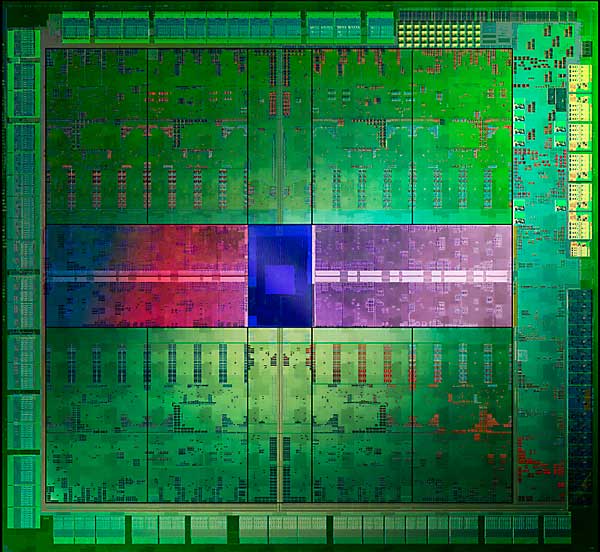
GeForce GTX 680
NVIDIA GK104 Kepler architecture GPU

As far as the memory specs of the GK104 Kepler GPU are concerned, the boards will feature a 256-bit memory bus connected to 2 GB of GDDR5 video buffer memory, but later versions will also be available with 4 GB of VRAM. On the memory controller side of things you'll see very significant improvements as the reference memory clock is now set at 6 GHz / Gbps. This boils down to to a memory bandwidth of 192 GB/s on that 256-bit memory bus. It's actually similar bandwidth to the GeForce GTX 580.

An immediate difference to the GPU core versus the shader processor domain is that both will be clocked at 1:1, meaning both the core and shader domain clock in at 1006 MHz, that means that the 2x shader hotclock from the last generation products is a thing of the past. One clock to rule them all (well internally there are dozens of different other clocks really, but let's keep it simple).

With this release, NVIDIA now has the first series 600 cards on its way. The new graphics adapters are of course DirectX 11.1 ready. With Windows 8, 7 and Vista also being DX11.1 ready all we need are some games to take advantage of DirectCompute, multi-threading, hardware tessellation and the latest shader 5.0 extensions.

For your reference here's a quick overview of some past generation high-end GeForce cards opposed to the new Kepler based GeForce GTX 680.

  GeForce GTX
285
GeForce GTX
480
GeForce GTX
580
GeForce GTX
680
ASUS GTX
680
DCUII TOP
Stream (Shader) Processors 240 480 512 1536 1536
Core Clock (MHz) 648 700 772 1006 1137
Shader Clock (MHz) 1476 1400 1544 1006 1137
Boost Clock - - - 1058 1267
Memory Clock (effective MHz) 2400 3700 4000 6000 6000
Memory amount 1024 MB 1536 1536 2048 2048
Memory Interface 512-bit 384-bit 384-bit 256-bit 256-bit
Memory Type gDDR3 gDDR5 gDDR5 gDDR5 gDDR5
HDCP Yes Yes Yes Yes Yes
Two Dual link DVI Yes Yes Yes Yes Yes
HDMI No Yes Yes Yes Yes

For Kepler, NVIDIA kept their memory controllers GDDR5 compatible. Memory wise NVIDIA has nice large memory volumes due to their architecture, we pass 2 GB as standard these days for most of NVIDIA's series 690 graphics cards.

The hardware engineers of NVIDIA reworked the memory subs system quite a bit, enabling much higher memory clock frequency speeds compared to previous generation GeForce GPUs. The result is this memory speeds up-to 6 Gbps. Each memory partition utilizes one memory controller on the respective GPU, which will get 256/512 MB of memory tied to it. There is word that a 4 GB version will be manufactured as well.

  • The GTX 580 has six memory controllers (6x256MB) = 1536 MB of GDDR5 memory
  • The GTX 680 has four memory controllers (4x512MB) = 2048 MB of GDDR5 memory
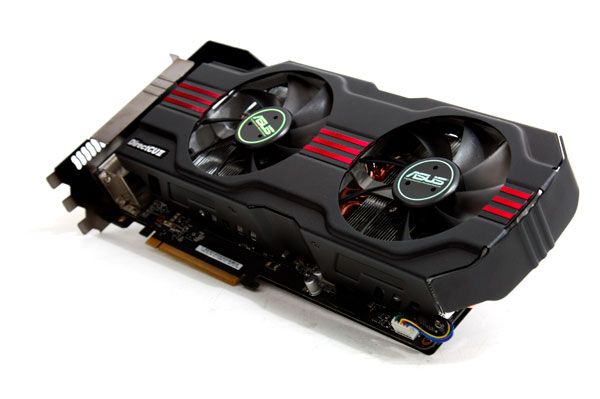
ASUS GTX 680 DCU II TOP


26 pages « 3 4 5 6 next »


Guru3D.com » Articles » ASUS GeForce GTX 680 ASUS DirectCU II TOP review » Page 4

Related Articles
ASUS GeForce GTX 670 DirectCU Mini review
In this article we review the ASUS GeForce GTX 670 DirectCU Mini edition, a compact performance graphics card designed primarily for small form factor PCs with mini ITX motherboards. The dual-slot card measures just 17cm and features the NVIDIA GTX 670 GPU. ASUS has re-engineered the DirectCU cooler to fit small form factor cases. While shorter, it introduces a copper vapor chamber placed directly on top of the GPU for faster heat spreading and dispersal with 20% lower temperatures than reference GTX 670.

ASUS GeForce GTX 660 Ti DirectCU II TOP review
In this review we'll test the GeForce GTX 660 Ti DCUII TOP from ASUS, it's their all new GeForce GTX 660 TOP version and admittedly to date is one of the most impressive graphics cards in the 660 Ti range we have tested.

ASUS GeForce GTX 660 DirectCU II TOP review
We review the ASUS GeForce GTX 660 DirectCU II TOP edition. It's factory overclocked pretty high, is pimped out and custom cooled. let's go have a look shall we ?

ASUS GeForce GTX 670 DirectCU II TOP review
We review the ASUS GeForce GTX 670 DirectCU II TOP edition. The DirectCU II TOP editions come factory overclocked pretty intensely towards 1058 MHz on the GPU base clock and a whopping 1137 MHz on the boost frequency. Even with that factory overclock, the card remains completely silent. Check out this review.

Follow Guru3D on Google+ - Facebook - YouTube - Twitter © 2013