Overclocking the graphics card
Overclocking the graphics card
As most of you know, with most video cards you can apply a simple series of tricks to boost the overall performance a little. You can do this at two levels, namely tweaking by enabling registry or BIOS hacks, or very simply to tamper with Image Quality. And then there is overclocking, which will give you the best possible results by far.
What do we need?One of the best tools for overclocking NVIDIA and ATI videocards is our own AfterBurner which will work with 90% of the graphics cards out there. We can really recommend it, download here.
Where should we go?
Overclocking: By increasing the frequency of the videocard's memory and GPU, we can make the videocard increase its calculation clock cycles per second. It sounds hard, but it really can be done in less than a few minutes. I always tend to recommend to novice users and beginners, to not increase the frequency any higher than 5% on the core and memory clock. Example: If your card runs at 600 MHz (which is pretty common these days) then I suggest that you don't increase the frequency any higher than 30 to 50 MHz.
More advanced users push the frequency often way higher. Usually when your 3D graphics start to show artifacts such as white dots ("snow"), you should back down 10-15 MHz and leave it at that. Usually when you are overclocking too hard, it'll start to show artifacts, empty polygons or it will even freeze. Carefully find that limit and then back down at least 20 MHz from the moment you notice an artifact. Look carefully and observe well. I really wouldn't know why you need to overclock today's tested card anyway, but we'll still show it.
All in all... do it at your own risk.
| Original | This sample | Overclocked |
| Core Clock: 1006 MHz | Core Core Clock: 1137 MHz | Core Clock: 1227 MHz |
| Boost Clock: 1058 MHz | Boost Clock: 1267 MHz | Boost Clock: ~1367 MHz |
| Memory Clock: 6000 MHz | Memory Clock: 6000 MHz | Memory Clock: 7200 MHz |
Now with the Dynamic boost function of the series 600 cards overclocking is definitely going to be more complicated. It remains simple though.
In Afterburner or the overclock tool of your preference, we go into the preferences. We can widen up the TDP limitations a bit, set the power limiter towards it's maximum (160%). That way the Dynamic boost function won't down clock all the time to meet it's upper threshold in TDP limitations.
The Core clock was increased with another 90 MHz we tried higher yet got some instability and our overclocks and tweaks are always based 100% game stability.
The memory on this board is flying frickin fast ! We got it running stable at 3600 MHz, which is a 7200 MHz effective gDDR5 datarate.
So for the core we ended at roughly 1367 MHz (!) with the dynamic clock kicking in, absolutely stable and for the memory we ended at 7200 MHz (effective data rate). The cooler was laft alone for fan RPM and it remained quite inaudible. It kept the GPU under 75 Degrees C when overclocked. With that extra performance at our hands, have a peek at the results when overclocked.
Oh and please DO compare the reference GTX 680 performance to the overclocked performance.
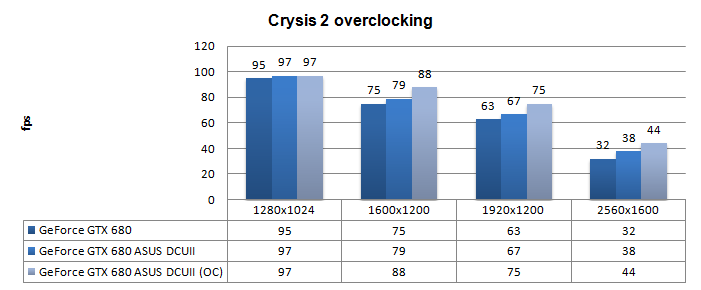
Above, Crysis 2, same maxed out image quality settings as before yet now with added overclock results:
- DirectX 11
- High Resolution Texture Pack
- Ultra Quality settings
- 4x AA
- Level - Times Square (2 minute custom time demo)
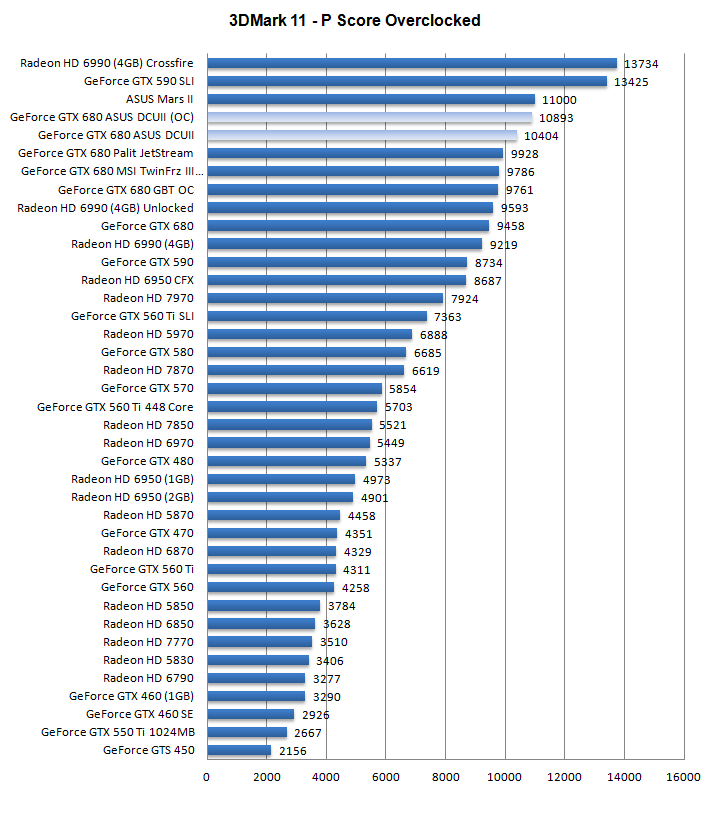
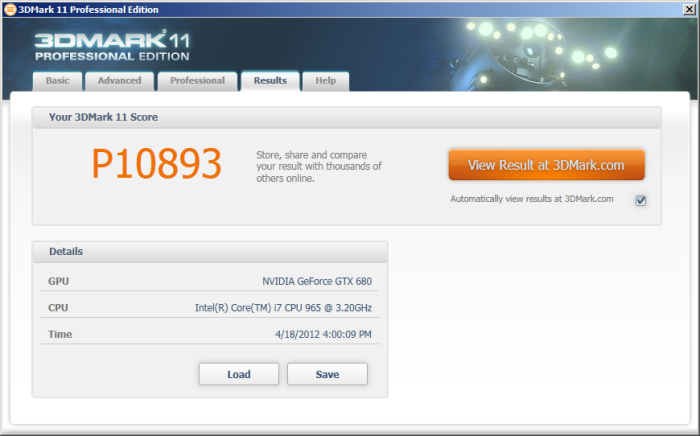
Above, 3DMark 11 - the Performance test and score. As you can see, there is an additional bump in this very GPU intensive software, lovely.
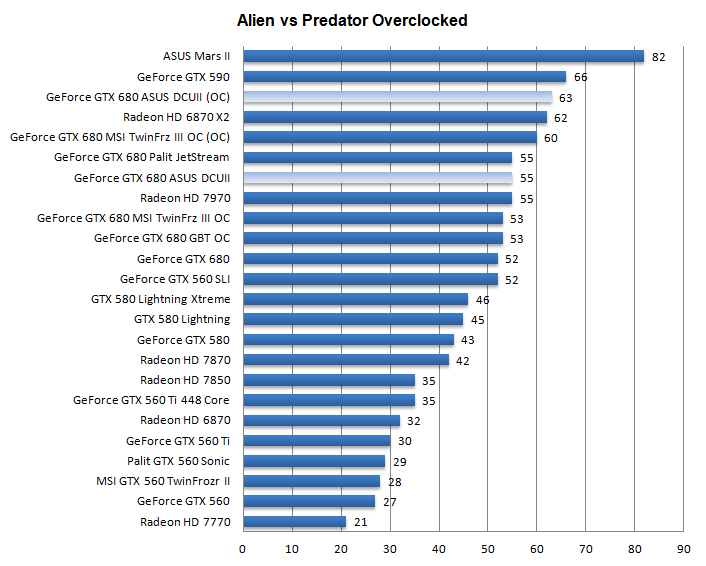
Above, Alien versus Predator, in 1920x1200 at 4xAA and 16X anisotropic filtering
